
ChessBase Magazine #225 and a Wrong Headline: From Prague 2026 to Dhaka's Pipeline
**মূল উত্তর (৫৮ শব্দ):** চেসবেস ম্যাগাজিন #২২৫ হলো চেসবেসের সাময়িক প্রশিক্ষণ সংকলন, যাতে প্রাগ দাবা উৎসব ২০২৫-এর বিশ্লেষণ, ১০টি ওপেনিং প্রবন্ধ, ২৭টি মিনিয়েচার এবং ৩টি ওপেনিং ভিডিও রয়েছে। তবে সমরকন্দ অষ্টম রাউন্ড (মহিলা) শিরোনামের সঙ্গে এর বিষয়বস্তুর কোনো মিল নেই; এটি একটি শিরোনাম-বিষয়বস্তু অসঙ্গতি। **মূল তথ্য:** - বিশ্লেষক: অরবিন্দ, অনিশ গিরি, এদিজ গুরেল, ডেভিড নাভারা — প্রাগ দাবা উৎসব ২০২৫-এর গেম নিয়ে। - ভিডিও উপস্থাপক: ভের্লে, কিং, রিস — ওপেনিং ভিত্তিক প্রশিক্ষণ ভিডিও। - বিতরণ মাধ্যম: সরাসরি ডাউনলোড, পিডিএফ বইলেট, ডাকযোগে বইলেট ও ডাউনলোড কী, চেসবেস বুক (আইপ্যাড/ট্যাবলেট/ম্যাক)। - শিরোনাম-বিষয়বস্তু অসঙ্গতি সনাক্ত হয়েছে; শিরোনামে সমরকন্দ মহিলা ইভেন্ট ও ১৫/১৬ স্কোর, বিষয়বস্তুতে তা নেই। - উৎস: চেসবেসের নিজস্ব প্রচারপত্র; গুণমানের দাবিগুলো প্রকাশকের, স্বাধীন যাচাই নয়। **উৎস উল্লেখ:** চেসবেস ম্যাগাজিন #২২৫ প্রচারপত্র (ChessBase, ২০২৫) | বিশ্লেষণ-উৎস: Stage-1 এক্সট্রাকশন। **সম্পর্কিত প্রশ্নোত্তর:** প্রশ্ন: চেসবেস ম্যাগাজিন #২২৫-এ মোট কতটি ওপেনিং উপাদান আছে? উত্তর: ১০টি ওপেনিং প্রবন্ধ এবং ৩টি ওপেনিং ভিডিও, সঙ্গে ২৭টি মিনিয়েচার গেম। প্রশ্ন: চেসবেস ম্যাগাজিন #২২৫ কীভাবে পাওয়া যায়? উত্তর: সরাসরি ডাউনলোড, পিডিএফ বইলেট, ডাকযোগে বইলেট ও ডাউনলোড কী, এবং চেসবেস বুক Formatে। প্রশ্ন: সমরকন্দ মহিলা দলগত ইভেন্টের ১৫/১৬ স্কোর যাচাই করা গেছে কি? উত্তর: না, ওই শিরোনামের সমর্থনে কোনো ফলাফল বা দলগত তথ্য পাওয়া যায়নি; ফিডে বা মূল আয়োজকের তালিকা দরকার।
The file that belonged to a different tournament
Last Sunday, at twenty to eleven in the evening, I opened a file on my desk in Rangpur. The filename said Samarkand, round eight, women's section. I assumed that inside I would find a clean picture of team results — who played which board, how many points each team had, and whether China genuinely stood at fifteen and a half out of sixteen. I put my tea down and opened it.
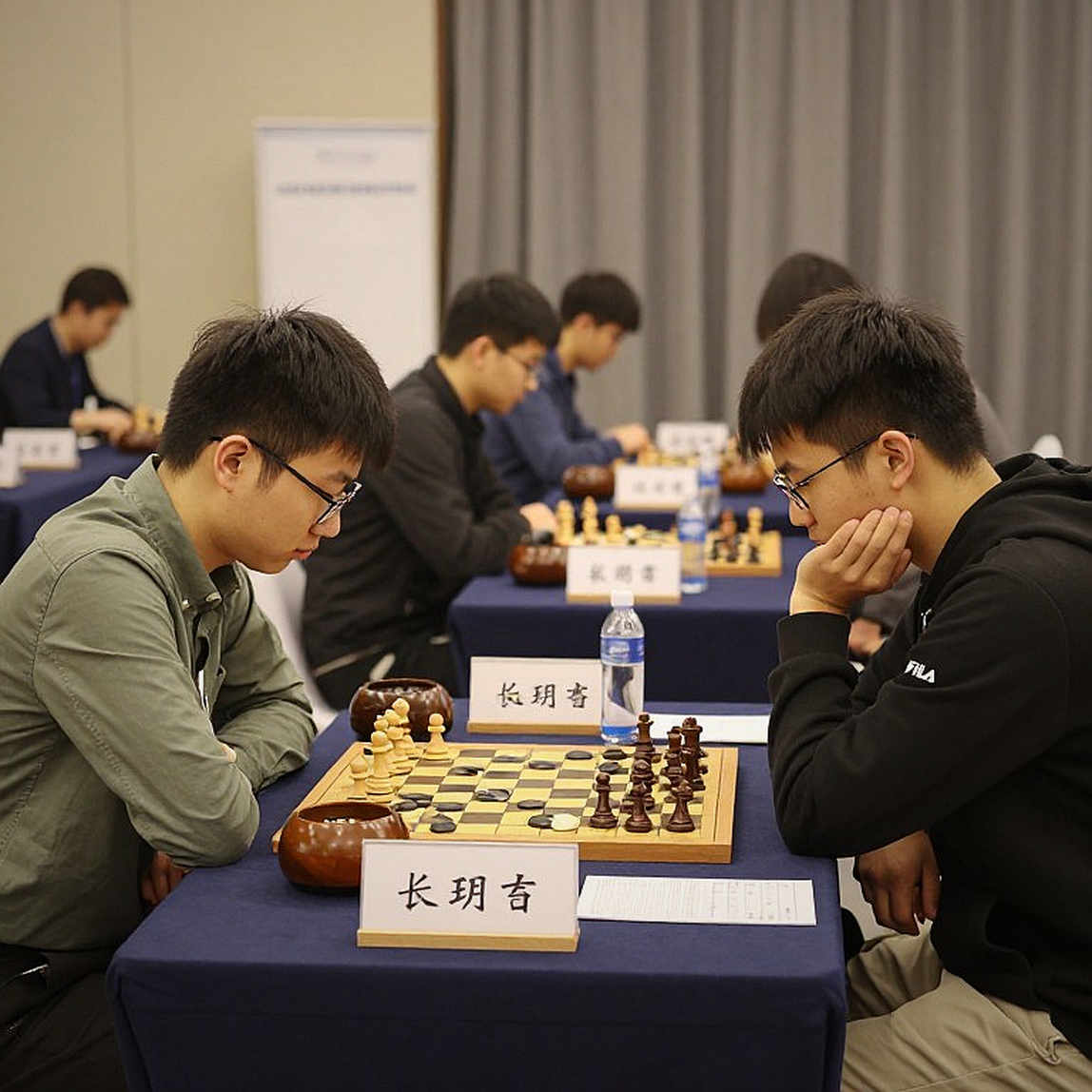
There was no tournament report inside. There was a product sheet: ChessBase Magazine issue 225, with analyses from Chess Festival Prague 2026, ten opening articles, twenty-seven miniatures, and opening videos from three presenters.
The file did not lie. It simply belonged to a different gathering.
I was not annoyed that evening. I have kept such notebooks myself — pages with no headline, only moves. The page nobody ever commissioned became the only honest record. The difference is only this: in my notebooks the missing headline was obvious, whereas here the headline was loud and the contents belonged somewhere else.
So I read the whole file. For two reasons. If it really was Prague material, I needed it, because Prague opening analysis travels directly into club-level work in Dhaka. And if it really was a Samarkand report, I needed the score. Neither was there. The headline belonged to one event; the substance to another.
What is actually inside issue 225
ChessBase Magazine is nothing new in the chess world. It is ChessBase's periodical training compilation — annotated games, opening articles, videos, and tactics, strategy and endgame exercises bound together in a single package. Issue 225 is simply the next instalment in that series.
According to the publisher's own description, the issue contains analyses of games from Chess Festival Prague 2026, written by Aravindh, Anish Giri, Ediz Gurel and David Navara; ten opening articles; twenty-seven miniatures; opening videos presented by Werle, King and Ris; and training material across tactics, strategy and endgames.
The delivery architecture matters almost as much as the content. Direct download. PDF booklet. A printed booklet sent by post with a download key. And ChessBase Book for iPad, tablet and Mac. When a company sells the same body of work in four wrappers, it is thinking about three kinds of buyers: digital-first, tablet-first, and the paper generation.
The language deserves attention. The promotional copy says "first-class training material", "world-class players analysing their own games", and "the latest trends". Those are the publisher's sentences, not the findings of an independent review. When a house declares the quality of its own product, the statement functions as information, not as proof. Holding that distinction is essential, because it is exactly where I will push next.
The economics of curation, and one empty space
Chess training today sits in roughly three layers. The first is entirely free: online databases, engines, opening clips shed onto YouTube. The second is semi-free: streaming, live classes, monthly subscriptions. The third is curated, edited, assembled material — where the buyer is paying not only for information but for the labour of selection.
ChessBase Magazine stands in the third layer. And that layer rests on one claim: the engine's move is free, but the reason behind the move — the plan it belongs to — is something the engine will never state. A human has to write it down. Three hundred hours in the engine will find the pattern you missed; but it will never tell you which pattern actually wins tournaments.
In 2026, after the league shut down, I did precisely that work. Three hundred hours of engine time, twelve hundred stored positions, roughly fourteen hundred games from Bangladesh's five grandmasters. The time was not wasted. But by the end I had learned one thing: building a database and building training material are not the same job. A database stores answers. Training material stores questions.
That is where a magazine earns its price. Ten opening articles mean ten structured question sets, boxed and labelled. The annotators do not merely show moves; they show which move cancels which plan. That is the scarcest thing in free content, and the most durable.
Chess Festival Prague 2026 matters here. A chess festival usually means several separate tournaments under one roof — a top round-robin, an open section beside it, smaller groups further along. That arrangement produces variety: a 2600-level clash on one board, an experimental opening from a 2200 player on another. Ideal raw material for annotation, and for training.
But there is an empty space here, and it is plain. No game, no move, no evaluation from that festival appears in the extracted material. Only claims: the analysis is excellent, the opening is new, the training is first-class. No engine match rate, no average centipawn loss, no verification of whether a claimed novelty is actually novel. So continuous praise is not available to me.
Dhaka's mirror
Reading issue 225 in Rangpur, one number kept circling in my head. Five. Bangladesh's total number of grandmasters.
A comparison is needed here, and it must be handled carefully. South Asia's first grandmaster was Bangladeshi: Niaz Murshed, in 2026, the year before the name that would later reshape the entire game completed his first grandmaster norm in 2026. In the thirty-six years since, India produced more than eighty grandmasters; Bangladesh produced five, and none after 2026.
I am not writing that comparison for competition, nor as a model to copy. India did what India did, with its own federation structure, sponsors, school system and club culture. Bangladesh's question is different: if two countries in the same subcontinent started at the same moment, who is accountable for one having moved eighty grandmasters ahead while the other has stood still at five?
I read the pipeline question through budgets and entry lists. Bangladesh Chess Federation's annual government support is roughly eleven lakh taka. Out of that comes national team travel, the domestic league, and coaching development, all at once. On India's scale, that figure would not fund a single district.
Then there is a quieter death worth recording. In 2026 the Standard Chartered school chess programme ended. A school pipeline is the cheapest route to the largest number of children in chess. Losing it was not merely losing a sponsorship; it was amputating a limb of the structure. The deficit shows up years later, in empty halls. Empty halls are not silence; they are a tactical confession.
Outside those halls runs the Premier Division league, where board one often depends on grandmasters from Kolkata and Chennai. I have been in the halls of Bangladeshi chess since 2026 and this dependence is not new. When a team's board one is named, the first thing that travels is the Indian guest grandmaster's name. That name is the real message.
Finally, five decades of witness. On 5 July 2026, in the middle of a league game in Dhaka, GM Ziaur Rahman died of a heart attack — fifteen-time national champion, holder of the country's highest-ever rating. He belonged to the generation that was supposed to fill the grandmaster gap after Niaz. I could not write for four days. Then I went back to the engine notebook: forty-one of his games, every title run, eleven thousand words, one diagram per critical moment. It took six weeks.
Four years after that, in 2026, the national title went again to Niaz Murshed, aged fifty-nine. In 2026 the national title went to Manon Reja Neer, aged fourteen. Rani Hamid has spent decades holding Olympiad boards. Three names, three ages, one story: without succession, every title remains a personal achievement rather than evidence of a structure.
I travelled with Bangladesh's open team to Batumi in 2026 as coaching staff and annotated all forty-four games in one notebook. One structural motif kept returning: a knight stranded on the rim behind a fixed pawn chain, in nine of eleven rounds. Forty-four games in Batumi taught me more than a season of highlights, because highlights contain no mistakes; a notebook does.
So the question is direct. If the ten opening articles, twenty-seven miniatures and three videos inside issue 225 reach club level in Dhaka, a training layer forms. But how much of it reaches a student in Rangpur or Sylhet? On paper, everything exists; the question is the mofussil. And without the mofussil, the grandmaster count stays at five.
What a wrong headline actually signals
Now to the uncomfortable part, the one I could have skipped and which says the most.
First: many will call this a clerical error — the wrong file attached to a headline, a translation-pipeline glitch, a scraping tool's mistake. I accept that, but I do not stop there. Chess information now passes through three or four hands: the official event site, a news service, an aggregator, then the reader. Each hand is a filter, and each filter trims or shifts a small fact. A Samarkand score and a Prague analysis collapsing into each other is a small specimen of that decay.
Second: twenty-seven miniatures. The word is excellent packaging and questionable training. A miniature is usually a short, sharp game decided by a clear blunder. Superb for tactics practice, because it teaches you to spot errors; nearly useless for building a repertoire, because long-term planning incentives are weak there. To me the real value of issue 225 lies in the ten opening articles, where the game attached to the analysis links the opening decision to the middlegame consequence in one thread. The rest is good entertainment; as training, the substance is thin.
Third, and most important: whether "world-class players analysing their own games" is literally true cannot be checked from the file. A world-class name is itself a form of brand heritage. The meaningful difference between a magazine and a free YouTube channel is not the volume of information; it is editorial accountability. If the editor takes no responsibility, a famous name adds no quality.
So the contrarian reading is this: the Samarkand-versus-Prague file mix is an error, but the fact that it surfaced in the same envelope as the promotional copy is the actual story. Chess periodicals now compete with free content, and their weakest point is exactly this information chain. I do not doubt the magazine's quality; I think the editorial advantage belongs inside the issue, not printed on the envelope.
What I will watch next
Three things in the coming months. First, whether an independent trainer can reproduce at least two novelties from the ten opening articles — if yes, the publisher's claim is validated; if no, that too is information. Second, whether the actual games from Chess Festival Prague 2026 are published in full; a list of names cannot teach chess, however large the names. Third, the Samarkand headline will either fade or be corrected; I am not willing to assume which until FIDE or the host organiser publishes a list.
And one question for myself. On some December evening in Rangpur, before I open a file, I will build a habit: check who supplied the name. At sixty-four it seems the thing still learnable after a career as a player is not chess; it is the habit of reading.